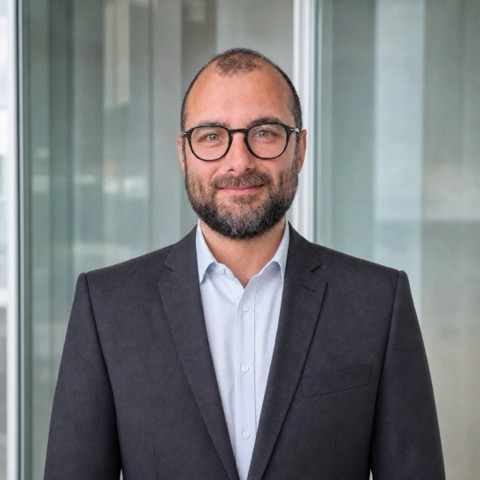
Alessandro Rudi
Professor of Practice, SDA Bocconi School of Management, Bocconi University, Milan
ERC Principal Investigator · Researcher at Inria (on leave)
I work on guarantees for AI: statistical guarantees for learning at scale, certificates of optimality for non-convex problems, and machine-checked proofs for AI systems that reason and act.
CV · Google Scholar · DBLP · LinkedIn · Email
My work makes guarantees practical. I designed FALKON, which made kernel learning with optimal statistical guarantees practical on billions of points. With kernel sums-of-squares, non-convex optimization problems are transformed into equivalent high-dimensional convex ones, whose solutions come with a certificate of how close they are to the global optimum. My ERC project REAL develops learning methods that are reliable, with explicit bounds on their error, and cost-effective.
I now work on machine-checked guarantees for AI systems that reason and act. With Carlo Ciliberto and Enrico Tassi I introduced Proof Carrying Contracts (PC2), an open protocol that makes agreements between AI agents enforceable: before an action covered by the agreement runs, the agent must supply a machine-checkable proof that it preserves the agreed constraints. I also work on infrastructure for formalized mathematics at scale and on the confidential deployment of language models.
Before Bocconi I spent seven years at Inria and École Normale Supérieure in Paris, where I led a group of more than ten PhD students and postdocs. In industry I was VP of AI at Prem AI (until June 2026), a Swiss company building confidential AI infrastructure, and worked on machine learning with EliseAI, SNCF and LightOn. I studied computer science in Rome and worked as a software engineer before a PhD at the University of Genoa and IIT, with a visiting period at MIT, and a postdoc at IIT and MIT.
- ERC Starting Grant
REAL, €1.5M, 2021–2027
- AI for Math Fund
$1M, 2026–2028; one of 22 projects selected
- 65 peer-reviewed papers
26 at NeurIPS (3 orals), 8 at COLT
- Area chair
NeurIPS, ICML, COLT
Programs
Open protocol · 2026–
Enforceable agreements between AI agents acting for different people and organisations. Before an action covered by the agreement runs, the agent must supply a machine-checkable proof that it preserves the agreed constraints, and an execution environment, the Airlock, checks the proof. Commitments are preserved when work is delegated to other agents.
With Carlo Ciliberto and Enrico Tassi, and research groups at SDA Bocconi, UCL, AI4I and Inria. Paper · Website · GitHub
AI for Math Fund · 2026–2028
Searchable formalized mathematics at scale
An AI-first database for formalized mathematics. Lean-compatible formal artifacts live in one persistent, versioned and queryable corpus, so that theorem provers and autoformalization systems can find, reuse and build on each other's results.
With Carlo Ciliberto and Fabio Zanasi (UCL). $1M from Renaissance Philanthropy and XTX Markets. Project page
ERC Starting Grant · 2021–2027
REAL: reliable and cost-effective machine learning
Learning methods that come with explicit bounds on their error and use the least computation needed to reach them: optimal kernel methods at billion scale, certified non-convex optimization, learning of dynamical systems.
European Research Council, €1.5M. CORDIS
Research
Enforceable commitments for AI agents
AI agents increasingly act for different people and organisations: they buy services, exchange information and delegate work to one another. What an agent must respect is written as text, and text does not make it comply. Proof Carrying Contracts turn agreed constraints into conditions checked before each action, so that parties can rely on an agreement without having to trust one another's agents.
Proof-carrying contracts: commitments AI agents cannot break, arXiv 2026
Program: Proof Carrying Contracts (PC2).
Formal reasoning and AI
A machine-checked proof is the strongest guarantee there is, and AI is making proofs cheaper to produce. I work on the infrastructure that lets AI systems produce, find and reuse formal proofs at scale.
Program: Searchable formalized mathematics at scale (2026–2028).
Confidential AI
How to run large language models so that only the user can read prompts and answers, and what trusted execution environments, homomorphic encryption and multi-party computation can each guarantee today.
Privacy-preserving LLM inference in practice, Cryptology ePrint Archive, 2026.
All publications
Software
Kernel learning with optimal statistical guarantees, made practical at scale: the method reaches optimal accuracy in O(n√n) time and O(n) memory, and its open-source multi-GPU library trains on billions of points. Library developed with Giacomo Meanti (lead developer), Luigi Carratino and Lorenzo Rosasco.
Used for model-independent searches for new physics in particle physics (Eur. Phys. J. C, 2022, and follow-ups at MIT, Geneva and ETH Zürich), for 3D surface reconstruction (Neural Splines, CVPR 2021) and for fast on-line learning on the iCub humanoid robot (IEEE Transactions on Robotics, 2022). A standard baseline for large-scale kernel solvers.
Group
At Inria and École Normale Supérieure I co-supervised nine PhD students and four postdocs. Where they are now:
- Vivien Cabannes
PhD 2022 · Researcher, Meta FAIR
- Boris Muzellec
Postdoc 2020–2021 · Google DeepMind
- Ruben Ohana
PhD 2022 · Senior Research Scientist, NVIDIA
- Luigi Carratino
PhD 2020 · Senior Research Engineer, Microsoft Research
- Loucas Pillaud-Vivien
PhD 2020 · Researcher, École des Ponts ParisTech
- Pierre-Cyril Aubin-Frankowski
Postdoc 2021–2023 · Associate Professor, École des Ponts ParisTech
- Gaspard Beugnot
PhD 2024 · Research Scientist, Alice & Bob
- Théophile Cantelobre
PhD 2024 · Machine Learning Engineer, Pennylane
- Alex Nowak-Vila
PhD 2021 · Research Scientist, Owkin
- Ulysse Marteau-Ferey
PhD 2022 · Owkin
- Rémi Jézéquel
PhD 2023 · Research Scientist, Capital Fund Management
- Clément Mantoux
Postdoc 2022–2023 · Machine Learning R&D Engineer, SNCF
- Luc Brogat-Motte
Postdoc 2023–2025 · Postdoctoral researcher, IIT
Current PhD students at Inria: Andrea Basteri (with Francis Bach) and Pierre Boudart (with Alexandre d'Aspremont and Pierre Gaillard).
Seven research and engineering positions on PC2 are being prepared, based in Milan (Bocconi, REAL) and Turin (AI4I, PRAXIS): see the positions.
Industry
- Aug 2025 – Jun 2026
- Prem AI, VP of AI. Confidential deployment of language models on trusted execution environments.
- 2023–2024
- EliseAI, New York. Models of tenant behaviour to reduce delinquency.
- 2022–2024
- EPHOS, Milan. Machine learning for models of photonic quantum chips.
- 2022–2023
- SNCF, Paris. Traffic forecasting for offer optimization.
- 2019–2022
- LightOn, Paris. Faster learning algorithms for optical computing hardware.
- 2019–2020
- Kamet Ventures (AXA), Paris. Machine learning for price optimization.
- 2007–2009
- Easy Automation, software engineer.
Service and talks
Area chair for NeurIPS, ICML and COLT. Reviewer for the Journal of Machine Learning Research, the Annals of Statistics, Applied and Computational Harmonic Analysis and Inverse Problems.
Selected talks
- Keynote, MASCOT-NUM annual meeting, April 2024 · slides
- Lectures on PSD models, PhD school, Scuola Normale Superiore, Pisa, January 2023 · video
- Czech-French Workshop in AI, Prague, September 2022 · video
- PRAIRIE colloquium, Paris, May 2022 · video
- AI and Mathematics seminar, CNR-IAC, March 2022 · video
- Structured prediction via implicit embeddings, Institut Henri Poincaré, Paris, April 2019 · video
- FALKON, Isaac Newton Institute, Cambridge, January 2018 · video
- Less is more: Nyström computational regularization, NeurIPS 2015, oral · video · slides